






Complete done-for-you
link building services powered by personalized outreach and digital PR

We earn you real links on real websites.The type of
backlinks you’ll be proud to share.

Quality backlinks are earned, not built

Link building shouldn’t feel like cheating.

Or be done just to manipulate SEO metrics like PageRank or Domain Rating. The mark of quality backlinks is that they’re on websites you recognize and drive rankings, recognition, and referral traffic. But links like this don’t come easy. Powerful SEO backlinks demand high-value content, creativity, and real human effort.

Your dedicated outreach manager will leverage up to 19 different link-earning strategies to win relevant backlinks to your website. From content promotion and blogger partnerships to broken link building and unlinked branded mentions, our SEO link-building services and techniques generate links Google loves at scale.

Group 35735 e1680138917606 - Voctos SEO Egypt

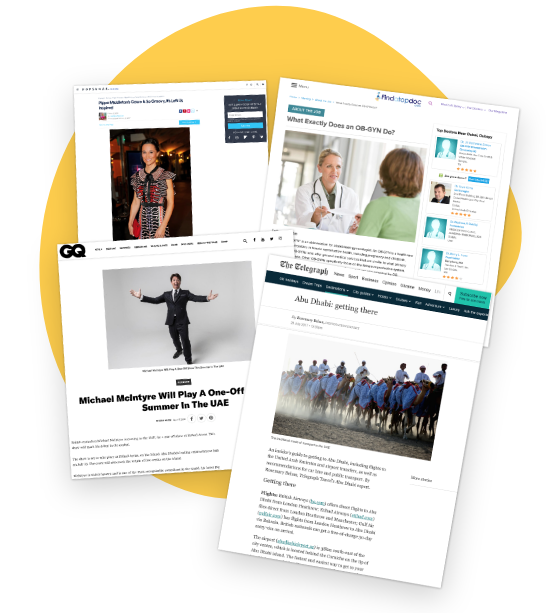
We’ve secured 15,975 links
and counting for our clients.

For brands including
From websites including

And our clients are
dominating because of it:

image 2 - Voctos SEO Egypt

908% increase in conversions

Group 35166 - Voctos SEO Egypt

$349K monthly revenue growth

ja white - Voctos SEO Egypt

1:200 return on investment

important link building - Voctos SEO Egypt

But wait, why is link building important?

Backlinks from relevant websites in your niche are
the number one signal for ranking on Google.

You can have the best SEO content and the most beautiful website in the world, but you’ll never rank if nobody links to you.

Our link-building company’s custom done-for-you link-building services manage the entire process from beginning to end. We use only organic white-hat link-building techniques that have been fine-tuned over many years.

Our human-driven link
acquisition engine.

Tested and proven methods for winning high-quality editorial links at scale.

Blogger partnerships

We publish articles linking to your website through partnerships with industry-relevant bloggers.

Reclamation link building

We contact websites mentioning your brand and have them link to your website for citation purposes.

Resource link building

We’ll promote link-worthy assets on your site through manual outreach to gain links from resource pages.

Broken link building

We earn quality backlinks by requesting publishers replace links to 404 pages with links to your website.

Skyscraper link building

We create high-value guides and infographics and promote them to your market’s link creators.

Ready to climb?

Read our best
link building blogs:

SEO Copywriting: How to Write Content That Ranks on Google and AI

Writing for search is no longer just about pleasing an algorithm. In today’s landscape, your words have to satisfy human readers, traditional search rankings, and the AI systems that increasingly summarize answers before anyone clicks. SEO copywriting is the craft of producing content that does all three at once: genuinely useful, clearly structured, and discoverable. This guide walks through the core principles that make copy rank and convert. Start With Search Intent, Not Keywords Before writing a single sentence, ask what the reader is actually trying to accomplish. Every query carries an intent, and matching it is the single biggest factor in whether your page earns a ranking. Broadly, intent falls into four buckets: people looking to learn something, people hunting for a specific brand or page, people ready to buy, and people comparing their options before they commit. A page that answers the wrong intent will struggle no matter how polished the writing is. The practical takeaway is simple. Look at what already ranks for your target query and notice the format Google rewards, whether that’s a how-to guide, a comparison table, or a product page. Then aim to serve that intent better than anyone else. Research Keywords the Smart Way Keyword research grounds your content in real demand. Rather than guessing, use research tools to find the terms your audience uses, then balance high-volume head terms with more specific long-tail phrases that carry clearer intent and less competition. Study the queries your competitors rank for to spot gaps you can fill. Once you’ve chosen a focus term, weave it naturally into the title, the opening, your subheadings, and the body, plus the closely related variations search engines now expect. Avoid forcing it. Modern ranking systems understand topics, not just exact-match strings, so writing comprehensively about a subject matters more than repeating one phrase. Our SEO copywriting services are built around this topic-first approach. Write Content People Actually Want to Read Quality is what keeps a visitor on the page, and engagement signals feed back into your rankings. Strong copy is easy to scan, with short paragraphs, clear sentences, and transitions that pull the reader from one idea to the next. Answer the obvious follow-up questions directly, because concise, well-structured answers are exactly what gets pulled into featured snippets and AI overviews. Depth matters too. Thin pages that skim the surface rarely satisfy anyone, while content that genuinely resolves a reader’s problem builds the trust that Google’s quality guidelines reward. Nail the On-Page Essentials On-page optimization is how you translate good writing into signals search engines understand. Write a title tag that reflects the content and leads with your primary topic, kept concise enough to display fully in results. Use a logical hierarchy of headings so both readers and crawlers can follow the structure at a glance. Craft a meta description that summarizes the page and earns the click, and add internal links to related pages to guide readers deeper and spread authority across your site. If you want a full review of these elements, our SEO services include a complete on-page audit. Support It With Technical Foundations Even brilliant copy underperforms on a site that’s slow or hard to crawl. Aim for fast load times, make sure the experience works flawlessly on mobile (which is what Google indexes first), and keep your URLs clean and readable. A logical site structure and an up-to-date XML sitemap help search engines find and understand your pages efficiently. Optimize for AI Search, Too The biggest shift since this topic was first written about is the rise of AI-generated answers. Tools like Google’s AI Overviews and conversational assistants now pull from well-structured, authoritative content and cite it directly. Writing in clear, self-contained sections, answering questions plainly, and backing claims with credible information all increase the odds of being referenced. This is the heart of generative engine optimization (GEO), and it’s quickly becoming as important as classic SEO. Measure, Learn, and Refine Great copywriting is never one-and-done. Use analytics to watch how people behave on your pages, which content holds attention and which loses it. Keep an eye on emerging topics your audience cares about, monitor the quality of links pointing to your content, and revisit older posts to refresh facts and tighten the writing. Steady, data-informed iteration is what compounds rankings over time. Bringing It Together SEO copywriting in 2026 rewards the same thing it always has, just with higher stakes: content that truly helps the reader, structured so machines can understand it. Lead with intent, research deliberately, write with clarity, cover the technical basics, and adapt to AI-driven discovery. Do that consistently and your pages will earn visibility across Google and the new generation of answer engines alike. If you’d like a hand, the Voctos team is here to help.

Read Post »

The Complete SEO Glossary: 70+ Essential Terms & Definitions (2026 Edition)

Search engine optimization comes with its own vocabulary, and that jargon can feel overwhelming when you’re just starting out. This glossary breaks down the most important SEO terms in plain language, fully updated for how search and AI-driven discovery actually work today. Bookmark it as a quick reference whenever you run into an unfamiliar word, and explore our digital marketing services when you’re ready to put these concepts to work. Numbers 301 Redirect: A server response that permanently sends both visitors and search engines from one URL to a different one, passing along most ranking signals in the process. 302 Redirect: A temporary redirect telling browsers and crawlers that a page has moved for now but will eventually return to its original address. 404 Error: The status code returned when a requested page can’t be located on the server, whether the page was deleted, moved, or never existed. 410 Error: A stronger signal than a 404, indicating that a page has been intentionally and permanently removed. A AEO (Answer Engine Optimization): The practice of structuring content so it can be pulled directly into answer boxes and AI-generated responses, where users get an answer without clicking through to a website. Algorithm Update: A change to the formulas a search engine uses to rank pages. Major updates can noticeably shift where sites appear in results. ALT Text: A written description attached to an image that helps screen readers and search engines understand what the picture shows. Anchor Text: The clickable, visible words that make up a hyperlink. B Backlink: A link from one website pointing to a page on another site. Quality backlinks remain one of the strongest trust signals in SEO, and earning them is the core of any link building strategy. Backlink Profile: The overall collection and quality of links pointing to a given website. Black Hat SEO: Manipulative tactics that break search engine guidelines in an attempt to rank faster, usually at the risk of penalties. Bounce Rate: The share of visitors who leave after viewing only a single page, without interacting further. Branded Keyword: A search term that includes a specific company, product, or service name, such as “Nike running shoes.” Broken Link: A hyperlink that leads to a page that no longer exists, returning an error instead of content. C Canonical Tag: A snippet of code (rel=”canonical”) that tells search engines which version of similar or duplicate pages should be treated as the original. Citation: An online mention of a business’s name, address, and phone number, important for local search visibility. Cloaking: A deceptive technique that shows different content to search engines than to human visitors. Content Gap Analysis: Comparing your content against competitors to find topics or subtopics you haven’t covered yet. Core Web Vitals: A set of Google metrics measuring real-world user experience. They consist of Largest Contentful Paint (LCP), Interaction to Next Paint (INP), and Cumulative Layout Shift (CLS). INP replaced the older First Input Delay metric in 2024. Crawl Budget: The number of pages a search engine is willing to crawl on your site within a given timeframe. Crawlability: How easily a search engine bot can access and move through the pages of a website. D Deindexed: A page that has been removed from a search engine’s index and can no longer appear in results. Dofollow Link: A standard link that allows search engines to follow it and pass ranking value to the destination page. Domain Authority: A third-party score (popularized by Moz) estimating how likely a domain is to rank, on a scale of 1 to 100. Domain Rating: Ahrefs’ equivalent metric, focused on the strength of a site’s backlink profile. Duplicate Content: Identical or near-identical content appearing across multiple URLs, which can dilute rankings. E E-E-A-T: Short for Experience, Expertise, Authoritativeness, and Trustworthiness, the qualities Google’s quality raters use to judge content. “Experience” was added to the original E-A-T framework in late 2022. Ecommerce SEO: Optimization tailored to online stores, focusing on product, category, and transactional pages. Editorial Link: A backlink earned naturally because another site found your content genuinely worth referencing. External Link: A link that points from your page to a page on a different domain. F Featured Snippet: A highlighted answer pulled to the top of Google’s results, often called “position zero.” G GA4 (Google Analytics 4): Google’s current analytics platform, which replaced Universal Analytics in 2023. It uses an event-based model rather than session-based tracking. Gemini: Google’s family of conversational AI models, used to power AI Overviews and chat-based answers. Gemini replaced the earlier Bard branding in 2024. GEO (Generative Engine Optimization): Optimizing content so it gets cited and surfaced inside answers generated by AI systems like Google’s AI Overviews, ChatGPT, and similar tools. Learn more about our GEO services. Google Business Profile: The free listing that lets local businesses manage how they appear across Google Search and Maps. Google Search Console: A free Google tool for monitoring how a site performs in search, spotting errors, and submitting sitemaps. Grey Hat SEO: Tactics that sit between clearly approved and clearly forbidden methods, carrying moderate risk. Guest Posting: Publishing content on another website, often to build authority and earn relevant backlinks. H Header Tags (H1-H6): HTML elements that organize content into a hierarchy of headings and subheadings, helping both readers and search engines follow the structure. Hreflang: An attribute that tells search engines which language and regional version of a page to show specific users. I Index: The massive database where a search engine stores everything it has crawled and deemed worth showing. Indexing: The process of analyzing and storing crawled pages so they can later appear in results. Internal Link: A link connecting one page to another within the same website. J JavaScript SEO: The discipline of making sure JavaScript-heavy sites can still be crawled, rendered, and indexed properly. K Keyword: A word or phrase you want a page to rank for in search. Keyword Cannibalization: When several pages on the same site compete for the same keyword, weakening each other’s chances. Keyword Clustering: Grouping related search terms together so a single page can rank for many variations at once. Keyword Difficulty: An estimate of how hard it would be to rank on the first page for a given term. Keyword Research: The process of discovering and evaluating the terms your audience searches for, used to shape content strategy. Keyword Stuffing: Cramming a page with repeated keywords in an attempt to manipulate rankings, a practice that backfires. L Link Building: The ongoing effort of earning quality backlinks to strengthen a site’s authority. See our link building services for a closer look. Link Equity: The ranking value passed from one page to another through a link, sometimes called “link juice.” LLM (Large Language Model): The type of AI model behind tools like ChatGPT and Gemini, increasingly relevant to SEO as search results blend with AI search optimization. Local SEO: Optimization aimed at appearing in location-based searches and map results. Long Tail Keyword: A longer, more specific phrase (usually four or more words) that tends to have lower competition and clearer intent. M Manual Action: A penalty applied by a human reviewer at Google for guideline violations, shown directly in Search Console. Meta Description: The short summary beneath a search listing that influences whether users decide to click. Meta Tags: Pieces of HTML that pass information about a page to search engines and browsers. Mobile-First Indexing: Google’s approach of using the mobile version of a site as the primary basis for ranking and indexing. N Negative SEO: Malicious attempts to harm a competitor’s rankings, such as building spammy links to their site. Nofollow Link: A link marked with rel=”nofollow” that signals search engines not to pass ranking value through it. Noindex Tag: A directive telling search engines to keep a specific page out of their index. O Off-Page SEO: Everything done outside your own site, mainly link building and brand mentions, to boost rankings. On-Page SEO: Optimization carried out directly on a page, including content, headings, and internal links. Organic Traffic: Visitors who arrive through unpaid search results rather than ads. Orphan Page: A page that no other page links to, making it hard for crawlers and users to find. P PageRank: Google’s original algorithm for valuing a page based on the quantity and quality of links pointing to it. Page Speed: How quickly a page loads, a factor

Read Post »

Get your free SEO proposal

Join the 80+ businesses that got a proposal from us in October 2025

Actionable Audit

Technical, on-page and off-page SEO analysis

Custom Growth Plan

A unique strategy designed to hit your goals

What We Charge

Our fee in relation to your return on investment

Frequently Asked Questions

Here are just some of the most frequently asked questions we get as a leading SEO link building company. Got a question of your own? Just ask

At Voctos, our link building service helps Egyptian and global brands earn editorial backlinks from authoritative, topic-relevant websites. We begin with a deep audit of your existing backlink profile, identify the link gaps your top competitors have already filled, and design a custom outreach roadmap aligned to your industry. Our team manually pitches editors, journalists, and niche publishers with original content assets created in-house. Every backlink is fully white-hat, manually placed, and tracked in your live project dashboard so you always see exactly which links went live and how they impact your rankings.

Link building pricing can vary from US$100 to over US$1,000 per backlink, depending on your content quality, reputation, and industry. A typical campaign budget is US$3,000 to US$20,000 per month and would include link prospecting, outreach, and content production.

The number of links we are to build varies and is influenced by several factors:

Niche – Some markets are more challenging than others due to the availability (or lack) of relevant websites.
Content assets – If the website we are working on has excellent content, link building becomes easier.
Spokesperson – If you are an authority in your industry, our ability to win links increases.

Unlike services that offer fixed backlink packages (which often sacrifice quality), we focus solely on earning high-authority, relevant links that move the needle. Your dedicated outreach manager will tap into up to 19 proven link-earning strategies, from content promotion and blogger partnerships to broken link building and unlinked brand mentions.

As a baseline KPI, we expect to win at least 3 high-quality linking domains for every 10 hours of outreach — often more, depending on your market.

The links we usually build range from DA20 to DA60 and often as high as DA90. However, we do not use DA (Domain Authority) as a primary measure of link value. Instead, we have an internal measurement system that uses other metrics like the number of ranking keywords, organic traffic, organic traffic trends, etc., to more accurately model the signals Google is using to assess link value.

We use this scoring to prioritize opportunities and monitor link building.

Our SEO backlinks services are 100% organic and use email outreach. We identify opportunities using multiple methods and then conduct outreach to website owners on your behalf. A unique strategy is developed for every campaign following an in-depth link building audit. The methods employed will be selected based on expected success. Most core link building campaigns combine blogger partnerships, broken link building, reclamation link building, and niche edits.

The organic SEO service ambitious brands turn to

For higher rankings
and more revenue.

Get in Touch

Voctos is a Egypt search engine marketing company, that deliver digital

Visit Us:
Point 9 Mall, Downtown, New Capital, Egypt
Mail Us:
➤➤➤➤
Phone Us: Egypt
+2 (010) 0805 3953
Phone Us: USA
+1 (302) 314-0080

Send a Message

    Still debating if
    Voctos is your best choice?
    Let your favorite AI explain